Introduction:
Immigration detention has drawn increasing global attention, particularly in the U.S, where facilities managed by U.S Immigration and Customs Enforcement (ICE) face scrutiny. Reports highlight concerns over overcrowding, prolonged detention and mental health impacts on migrants. Images of families in restrictive environments question detention’s effectiveness and humanity (Human Rights Watch, 2025).
While the U.S often dominates public discourse, immigration detention is not exclusive to it. The UK’s Home Office oversees its immigration detention facilities. Public understanding of the UK system is lower despite ongoing debates about conditions and confinement effects (The Migration Observatory, 2022). Understanding these U.S and UK institutions is crucial as they illustrate governmental approaches to immigration regulation and authority through confinement.
This blog explores ‘sites of confinement’, focusing on prisons and immigration detention facilities, exploring how contrasting countries can offer insights into global mechanisms of confinement.
What Are Places of Confinement?
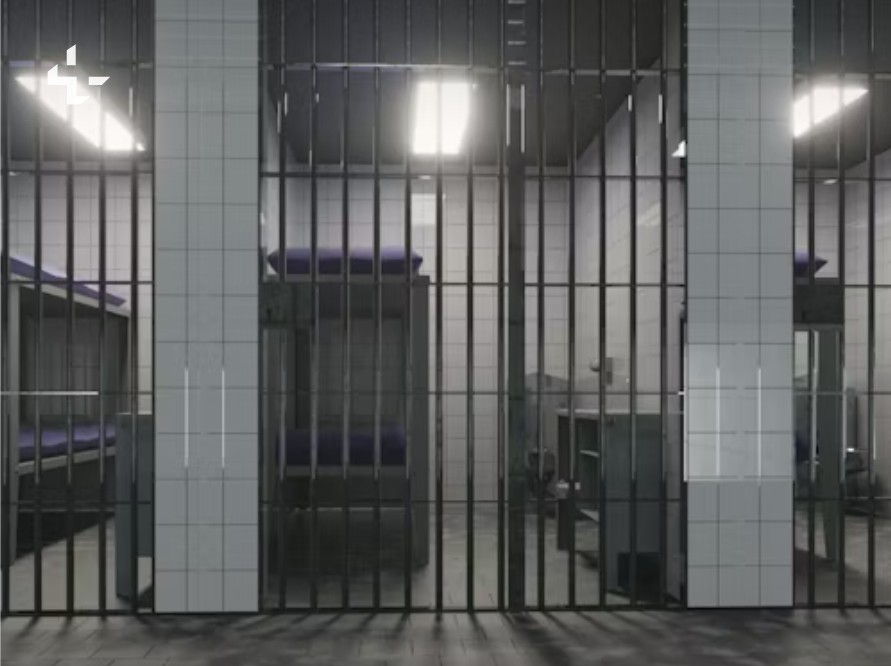
Confinement sites are environments where individuals are restrained and monitored. Prisons, the most well-known example, incarcerate individuals found guilty of crimes to protect the public, punish offenders and in some situations aid in rehabilitation.
However, prisons are not the only confinement sites. Immigration detention facilities represent another restricted setting. Unlike prisons, those held in immigration detention may not have committed crimes; they are detained for administrative reasons, such as awaiting immigration judgments or potential deportations. Despite this legal distinction, these facilities often feature surveillance, limited mobility and regulated schedules, like prisons (Bosworth, 2014).
These parallels highlight how both prisons and immigration detention facilities control conduct and uphold law and order. For individuals in these environments, the lived experiences of incarceration can be remarkably similar, despite differing legal justifications.
Comparing the U.S and UK Systems:
There are notable similarities and differences between the immigration detention systems in the U.S and the UK.
In recent decades, the number of migrants detained in ICE facilities, often privately run, has significantly expanded. Tent camps at military bases and infamous detention facilities across the country are just two examples of how the U.S has a horrific history of putting the lives of immigrations in its custody in jeopardy by housing them in settings where illness, medical neglect and physical abuse are common. At least 32 people died in ICE detention last year, and 2026 is already on course to be much worse, with 14 deaths reported since the start of the year (César, 2026).
The UK’s system is smaller, but, notably, there is no legal term limit for immigration detention, allowing for indefinite detention. Detention Action (2024) reports that detainee tension and anxiety rise significantly due to indefinite custody. The UK system still has problems with accountability, transparency and inmate treatment while having fewer facilities.
Both systems use confinement to manage migration despite scale variations. These problems in the U.S and the UK are representative of global difficulties that transcend national boundaries.
Overlapping Systems of Controls:
Immigration detention facilities and prisons do not function independently. Rather, they are components of larger control systems influencing how individuals navigate institutions. Individuals completing criminal sentences may be transferred directly into immigration detention, prolonging their incarceration. This movement between forms of custody without clear transitions creates complex experiences.
These overlapping systems show incarceration serves purposes beyond administrative processing or punishment, often reflecting broader societal control, monitoring, and authority. This clarifies why scholars often examine immigration detention and prisons collectively, rather than as entirely separate systems (Bosworth, 2014).
Considerations for Readers
Understanding places of confinement is vital for everyday discussions about justice, immigration and human rights, rather than being solely an academic matter. Readers might consider:
- How much is truly known about the inner workings of prisons and detention facilities?
- Why do certain nations limit the length of incarceration, while others do not?
- The potential effects of extended incarceration on mental health and institutional trust.
These inquiries offer a deeper understanding of how confinement systems impact people and communities.
Conclusion
Prisons and immigration detention facilities represent forms of confinement that significantly influence governmental approaches to migration and crime. While the scale and structure of these institutions differ between the U.S and the UK, they share many commonalities, especially regarding how confinement impacts daily life and well-being. A comparison of these systems reveals that discussions surrounding detention are not confined to a single nation but form part of broader international dialogues on justice, authority and human rights. To recognise their wider societal impact, it is crucial to first understand these environments.
References
Bosworth, M. (2014). Inside immigration detention. OUP Oxford.
César, A. (2026). Another Disturbing Surprise from ICE. [online] Human Rights Watch. Available at: https://www.hrw.org/news/2026/04/09/another-disturbing-surprise-from-ice.
Detention Action (2024). What is Immigration Detention? [online] Detention Action. Available at: https://detentionaction.org.uk/about-detention/what-is-immigration-detention/ [Accessed 15 Apr. 2026].
Humans Rights Watch (2025). US: Immigrants Abused in Florida Detention Sites. [online] Human Rights Watch. Available at: https://www.hrw.org/news/2025/07/21/us-immigrants-abused-in-florida-detention-sites.
The Migration Observatory (2022). Immigration Detention in the UK. [online] Migration Observatory. Available at: https://migrationobservatory.ox.ac.uk/resources/briefings/immigration-detention-in-the-uk [Accessed 15 Apr. 2026].
 BEYOND THE WALLS
Leave a comment